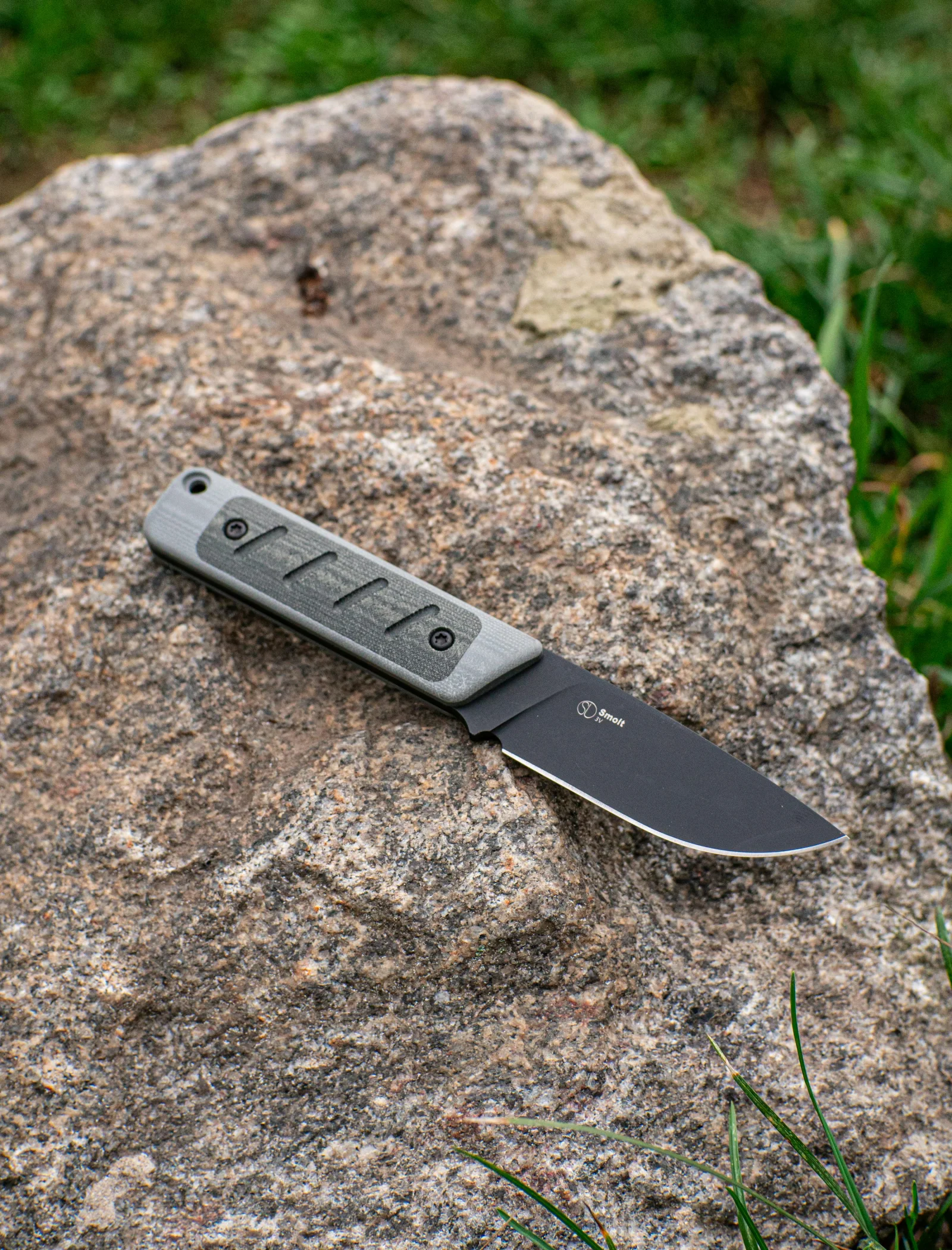
Make the carry decision first.
A folder stores its blade inside the handle. A fixed blade needs a separate way to cover and secure the edge. Before comparing dimensions, decide where the tool will ride, how it will be stored between tasks, and whether you can follow the maker’s instructions in that setting.
Compare the whole system.
On our shortlist the Companion (S) includes a sheath; the Opinel No.08 is a folding design. Do not compare an advertised blade length with another model’s closed length, or a knife-only weight with a weight that may include accessories. When the source does not explain a measurement, leave the uncertainty visible.
Do not turn construction into a test result.
A fixed design tells you that there is no folding joint. It does not tell you how a particular blade tolerates a particular task. A lock on a folder likewise is not a measured strength rating. Read the exact model’s intended uses and limits. We have not tested the knives in this launch catalogue.
Ask what would make you leave it at home.
A tool that feels awkward to carry may spend the trip in the wrong pocket or buried in a bag. Write down the likely inconvenience for each format. Then compare how important the knife is to your actual plans. Your answer may be a folder, a fixed blade, or a multi-tool; there is no universal winner in the specification table.
About this guide
This is an editorial buying checklist. It makes no product performance claims. Named product facts are linked in the individual profiles.
Put the questions to work.
Compare the documented facts without turning them into a performance score.
Compare knives